A robot can raise output while reducing the number of people needed for a task. Universal basic income, or UBI, would give each person regular cash without a work test, so the real question is who owns the machines and how the gains reach households.
Quick read
- UBI is a cash payment made to each person, with no job or income condition.
- Robots can change how income is earned, but they don't decide how income is shared.
- A workable plan needs a funding source, a payment level, and rules for existing benefits.
What UBI would change
UBI separates a basic income from a person's job. The payment would go to people who are working, looking for work, studying, caring for relatives, or unable to work. That design makes the policy easy to explain, but the cost would depend on the payment and the number of people covered.
A robot-powered economy raises the stakes because wages may no longer be the only main way households receive money. If a company replaces paid labor with software, robot arms, or autonomous vehicles, the company may keep more of the output.
The people who lose hours or jobs would still need housing, food, health care, and power. UBI would not fix that ownership question by itself. It would move some money back to households, while leaving control of the machines with their owners.
How robots could affect the case for UBI
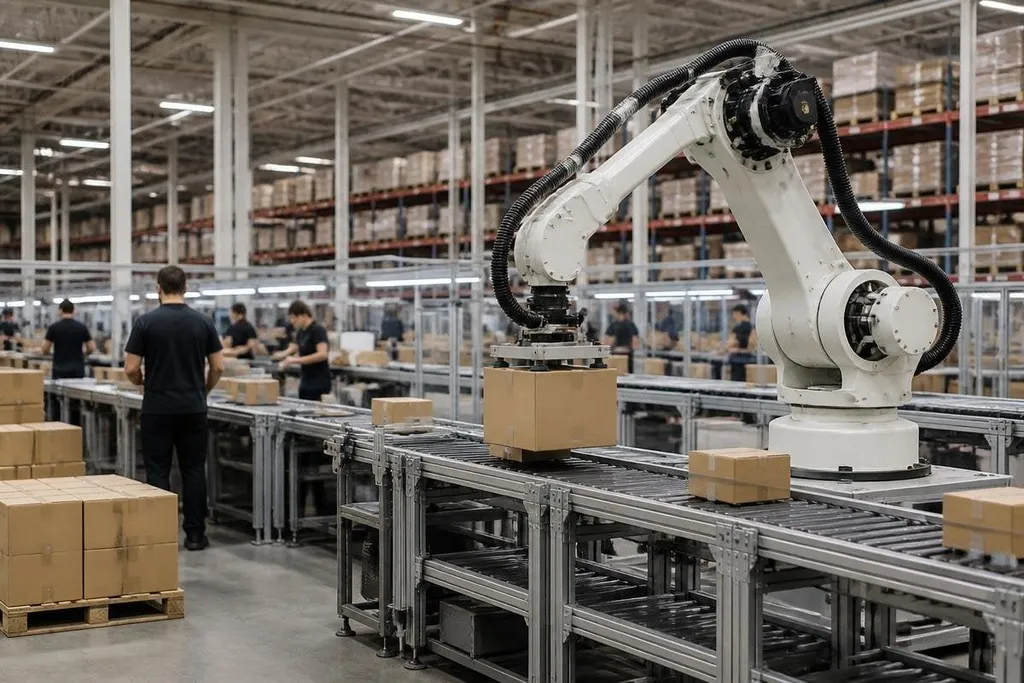
Automation can remove certain tasks, change other jobs, and create new work around maintenance, software, safety, and operations. The effect depends on the task, the machine, and the speed of adoption. A warehouse robot that moves boxes has a different effect from software that handles customer support.
That difference matters for policy. A worker may keep their job but lose hours, bargaining power, or access to paid training. Another worker may move into a new role, but need time and money before that happens. UBI could give people room to make that move without tying every payment to a fast return to work.
The strongest case is a stability case. Regular cash can help a household handle a gap between jobs or a short training period. The open question is scale: a payment that covers a small bill may help, while a payment meant to cover basic living costs would require much more public money.
The funding problem
A UBI plan needs a named source of funds. Options could include income tax, company tax, taxes on land or natural resources, or a charge on certain forms of automated production. Each choice changes who pays and how companies respond.
A machine tax sounds direct, but it could punish a firm for buying one robot while leaving a similar software system untouched. It could also push companies to move production or change how they label equipment. A broad tax base may raise more money, but it would spread the cost across more people and firms.
The payment must also sit beside public services. Cash can help with a grocery bill, but it doesn't replace a hospital, a school, public transport, or accessible housing. If UBI replaces those services, a household may receive money and still face higher costs for the things it needs.
The machines behind those labor changes need a clear record too. Robot24 follows the robots, companies, and research tied to automation, helping you separate a working system from a forecast. The next section looks at what the evidence still cannot show.
What remains unproven
No robot can tell us how much income a household needs. No policy label can show whether a payment would reduce hardship, raise prices, change work choices, or improve health. Those results would depend on the payment size, tax rules, local costs, and the public services kept in place.
UBI could also share money without sharing power. If a small group owns the factories, data, software, and robots, the payment may become a transfer from public funds to households living under private control. A wider ownership plan, such as public investment funds or worker shares, would target that problem more directly.
I think UBI makes more sense as one part of a robot-era income plan than as a replacement for work, services, or worker rights.
A practical test for any UBI plan
Use these checks before judging a proposal:
- Name the payment in currency and state how often it arrives.
- Show who pays, including the tax base and collection method.
- Keep or price the public services that cash cannot replace.
- Explain how the plan handles disabled people and high local costs.
- State what happens when a company replaces a paid task with a robot.
- Set a review date and list the results that would change the policy.
The next useful step is not another prediction about robots taking all jobs. It is a costed plan that names the payment, the funder, the services it protects, and the ownership rules around the machines.